In a world facing climate challenges, resource shortages and the depletion of primary forests, the choice of building or interior materials can no longer be made lightly. Today, a product's environmental impact matters as much as its durability or its looks. And on that front, bamboo stands out. Long seen as a simple alternative, it is now establishing itself as a genuine solution for the future. Renewable, fast-growing, resource-light and naturally CO₂-absorbing, bamboo ticks every box of ecological awareness.
Spectacular growth that limits deforestation
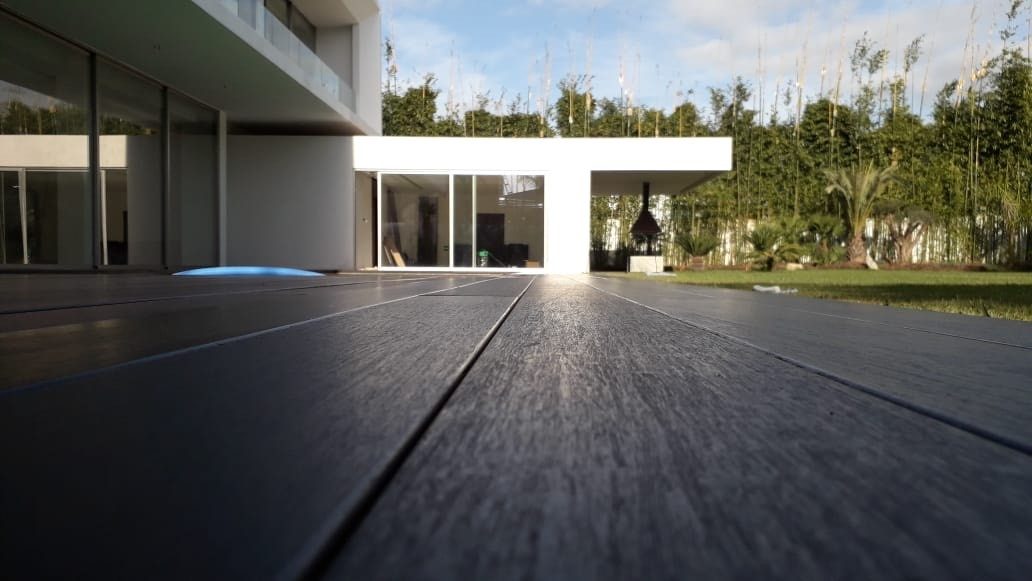
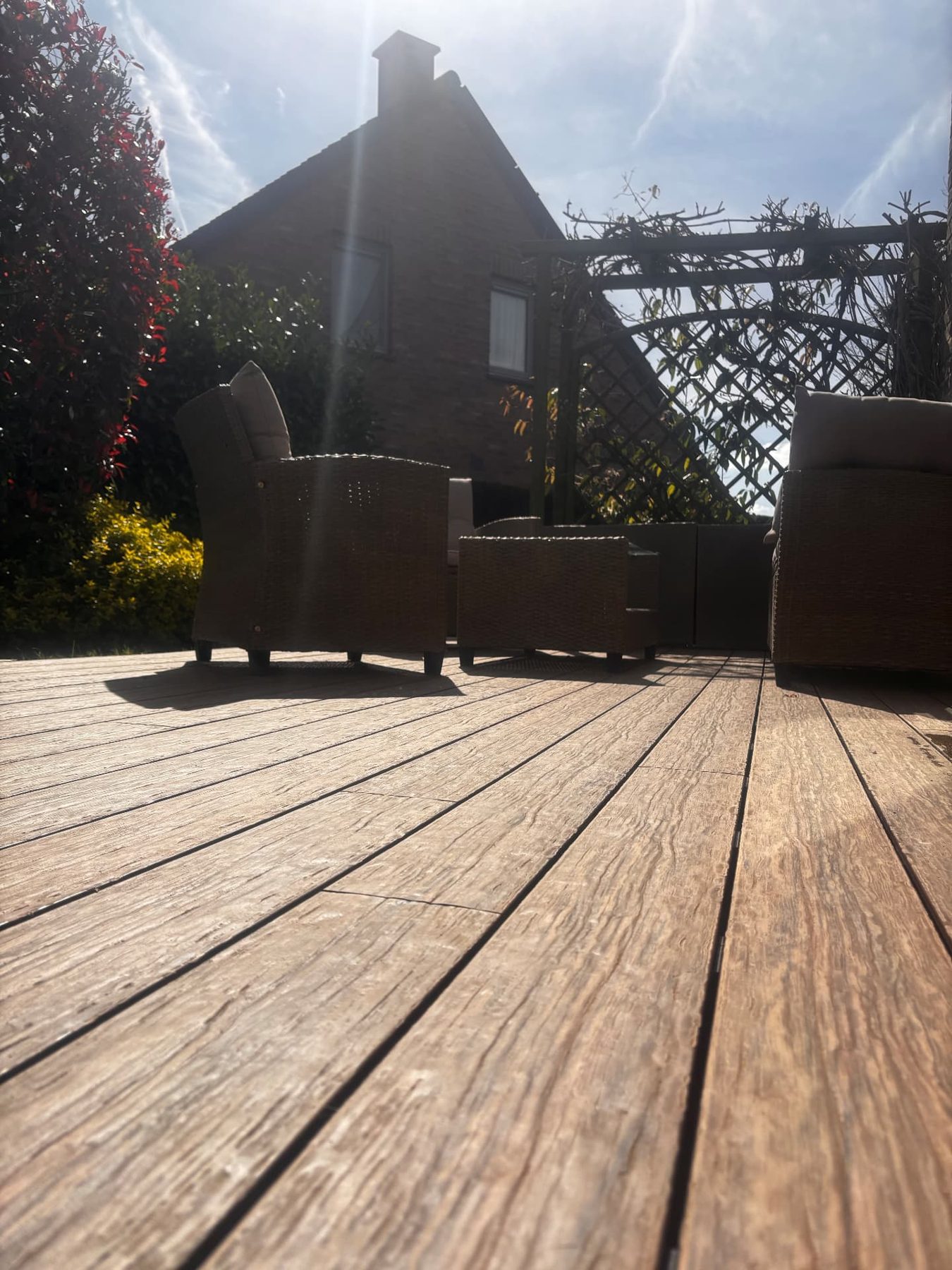
ootouch gives you advice for making the right material choice for your terrace. It's not just a matter of style: it's also a commitment to a more responsible approach.
If you regularly read all our articles, you already know that the first argument in favour of bamboo is its growth rate. Where an oak takes several decades to reach maturity, some bamboo species reach their adult size in just 4 to 5 years. Even better, some shoots can grow a metre a day under optimal conditions.
This speed allows for frequent harvesting without needing to replant, since bamboo regenerates naturally through its root system. Result: the resource can be exploited without depleting the soil or sacrificing forests. By comparison, cutting exotic or tropical wood often contributes to deforestation, loss of biodiversity and degradation of ecosystems.
Bamboo, for its part, grows on non-wooded land, often fallow land, and therefore represents an ideal alternative for limiting the pressure exerted on natural forests.
Four good reasons to choose bamboo as an alternative to wood
A remarkably efficient carbon sink
If trees capture carbon dioxide as they grow, bamboo does even better. Its intense photosynthesis allows it to absorb more CO₂ and release more oxygen for the same surface area than an equivalent forest. It is estimated that one hectare of bamboo can store up to 60 tonnes of carbon per year, several times more than a broadleaf forest.
By promoting bamboo planting, we actively fight greenhouse gases. This ability to capture carbon makes it an ideal material for projects concerned about their environmental footprint, whether in construction, design or landscaping.
Moreover, since bamboo can be harvested without felling the whole plant, its carbon footprint remains very low throughout its life cycle.
Farming that respects soils and resources
Another often overlooked advantage: growing bamboo requires little chemical input. Unlike large-scale intensive crops, it generally does not need large quantities of pesticides or fertilisers. Its root density naturally protects soils against erosion, while improving their structure and fertility.
Bamboo acts as a true natural stabiliser, particularly in areas subject to degradation or desertification. It allows for rapid reforestation of damaged surfaces, soil stabilisation and restoration of local biodiversity.
As for its water requirements, they remain moderate compared to other crops intended for construction or furniture-making. This makes it a relevant choice in areas subject to water stress.
A durable, resistant and recyclable material
Bamboo is not only ecological when it is grown. It also is in its use. Thanks to modern heat treatment and compression techniques, bamboo becomes an ultra-resistant material, capable of rivalling the densest woods on the market. Its outdoor longevity, when well maintained, often exceeds 20 years, with excellent resistance to bad weather, moisture, insects and temperature variations.
And unlike composite or plastic materials, bamboo remains 100% natural and recyclable. At the end of its life, it can be transformed, composted or recovered, without leaving non-degradable waste in nature.
It is this combination of technical durability and low environmental impact that is increasingly appealing to architects, designers and individuals wishing to consume differently.
Bamboo, this 100% natural, deforestation-free material
A responsible alternative to exotic wood
The success of exotic wood for terraces or cladding is due to its sturdiness and aesthetics. But its ecological impact remains high: often unsustainable harvesting, long-distance transport, destruction of natural habitats... Even when certified, these woods raise questions.
Bamboo, on the other hand, offers a high-performing, ethical and renewable alternative. It allows you to achieve the same warm, natural and noble effect, without encouraging deforestation or fuelling opaque supply chains. Moreover, its processing requires less energy than that of many industrial materials, which further strengthens its appeal within a low-carbon approach.
A concrete gesture for a planet in transition
Faced with grand speeches about ecology, it can sometimes be hard to know how to act concretely. Choosing a material like bamboo to fit out your home, terrace or outdoor spaces is a simple and effective way to contribute to a more sustainable lifestyle.
It means choosing a material that respects the cycles of nature, that renews itself without depleting, that captures more CO₂ than it emits, and that allows you to build without destroying. It is also a choice that sacrifices nothing in terms of aesthetics, quite the contrary: bamboo captivates with its elegance, its soft texture, its warm tone and its modernity.
At ootouch, we have always believed in the power of this exceptional material. That is why we select our plantations with care, ensure environmentally friendly treatments, and support each project with the rigour it deserves.