The showdown between oak flooring and bamboo flooring is on! The two materials compete on the same ground, and it's often hard to choose between them. Wood is a story of tradition, a local material that has long been established in our region. Bamboo, on the other hand, stands out for its serenity, its eco-friendly side and its great strength! ootouch offers you a detailed comparison of the two products. Oak flooring or bamboo flooring: may the best one win! 🏆
So similar, yet so different
You want to change the flooring in your house or flat, but you're faced with too many choices? You want an authentic, warm interior, but it also has to respect the environment and not cost the equivalent of the European Union's GDP. It also has to suit your taste, blend with your furniture, and withstand both the passage of time and everyday mishaps. Your future floor will have to tick off a long list of criteria before becoming the chosen one.
While there are many flooring options, the two most common in recent years are oak and bamboo. For a long time, oak dominated the European market: a local, resistant product available in a wide range of species. But that was then! For in recent years, bamboo has been competing and nipping at the heels of its rival's dominance. Having become a trendy material, there's something for every taste! 🥊
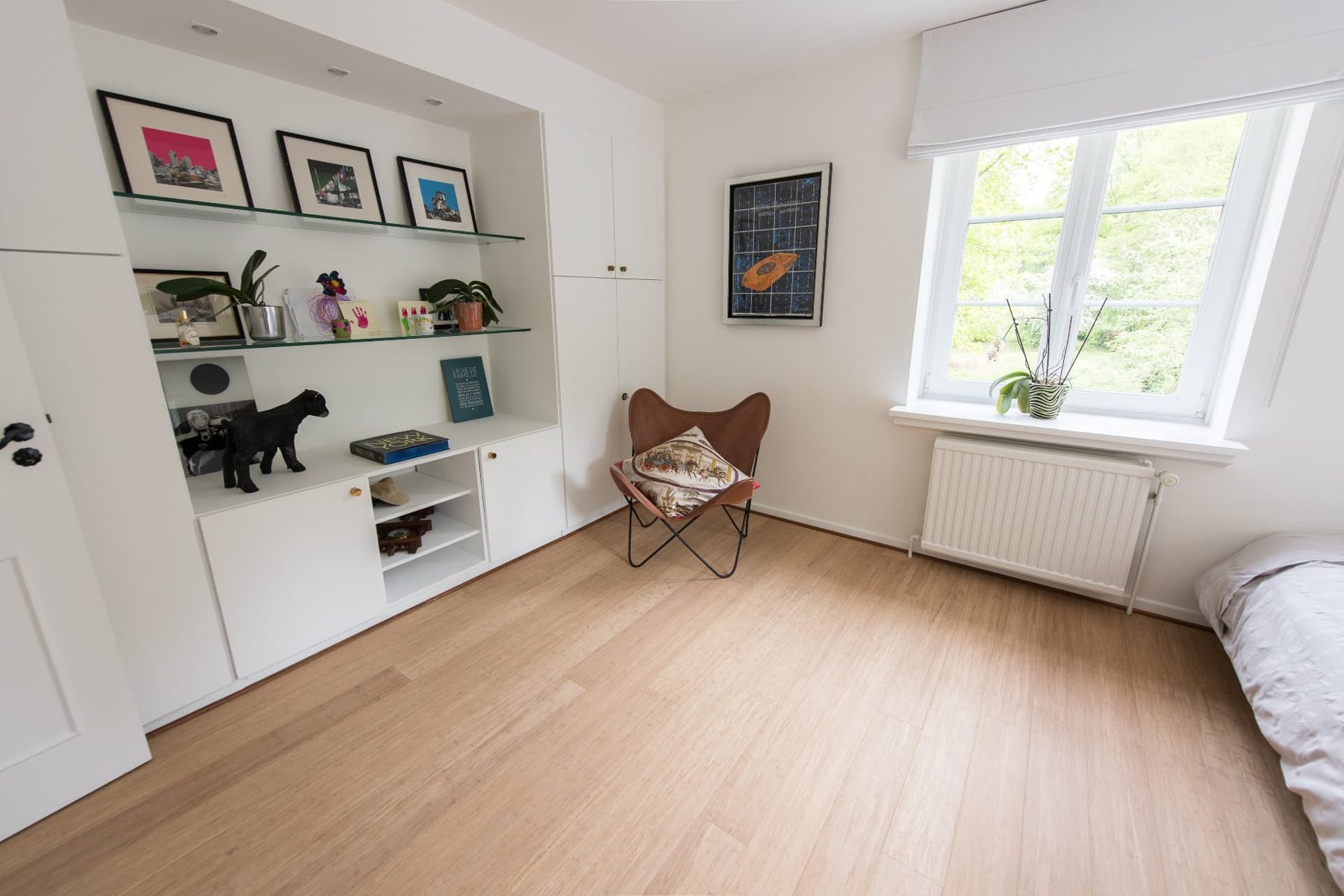
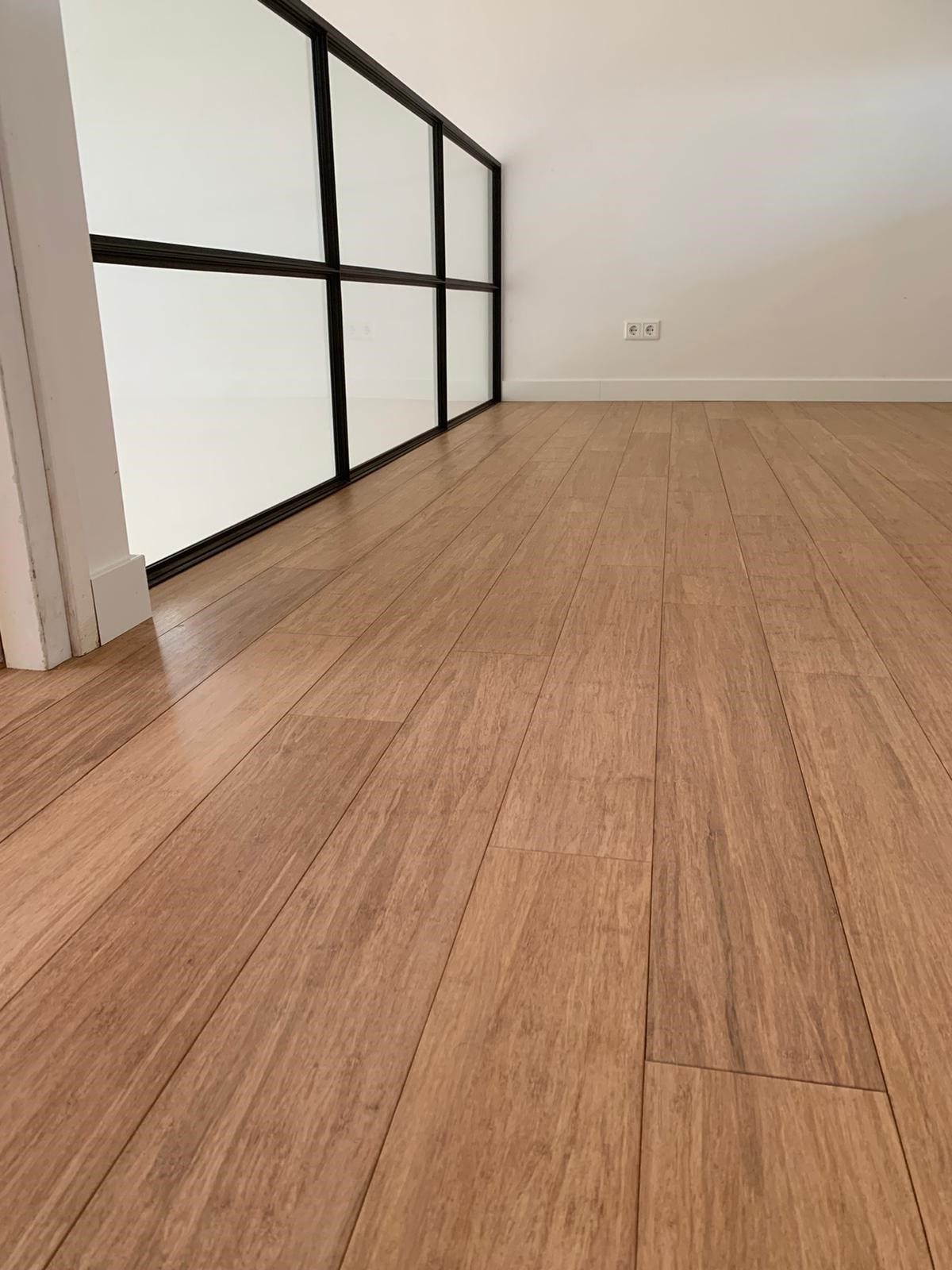
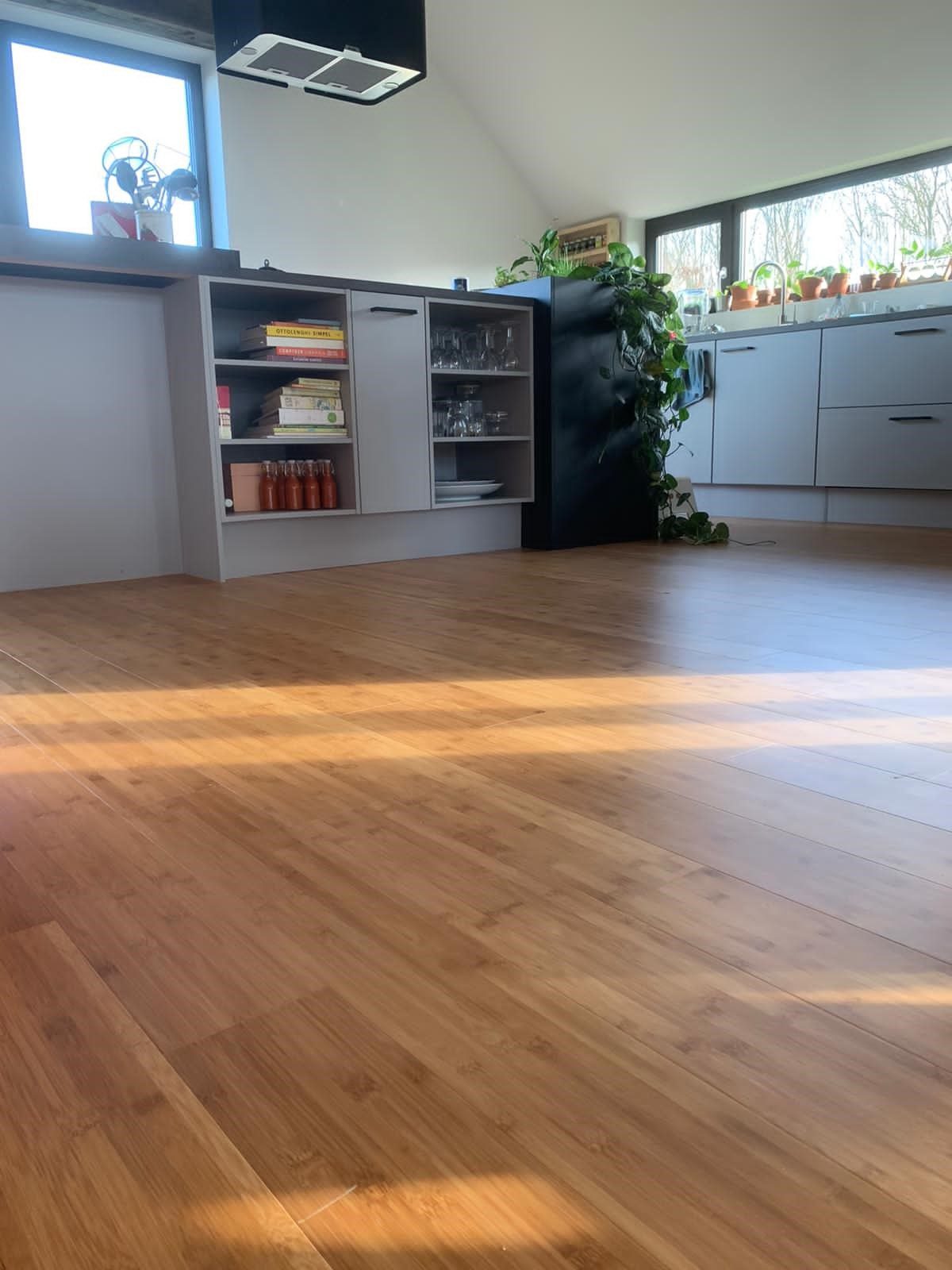
We eat with our eyes, but your meal isn't the only time of day when looks matter. If there's one point not to overlook, it's certainly the appearance of the flooring you're going to install. After all, you'll be looking at it every day for several decades. Oak has a regular look or one with knots, with straight grain and colours varying across different shades of brown. 🤎
Qualities also found in bamboo. With the same straight grain and colours ranging from light beige to dark brown, bamboo's appearance has nothing to envy in its rival.
After round one, the two materials are therefore evenly matched: 1-1, nothing is decided yet!
Stronger than steel!
To test the hardness of a plant, scientists can use different tests, such as the Janka or Brinell tests, which measure the force needed to press a 23 mm steel ball into the material. The Brinell test measures the indentation left by the 1 kg ball when dropped from 50 cm. These tests are also used with bamboo. The higher the result obtained, the better the product's resistance.
Oak thus gets a hardness rating of 3.7, well below that of bamboo. Indeed, the vertical and horizontal structures have a hardness of 4.35, while the BamWood range reaches a rating of 8.5! In other words, this is an exceptional, ultra-resistant bamboo, being up to two and a half times harder than oak! Advantage bamboo, then. 🦾
Round two goes to team bamboo, taking the lead: 1-2! No holding back!
🎍 BambooFact: Bamboo is an ultra-resistant material that can withstand enormous pressure before giving way. Bamboo flooring owes its strength to its flexible, hollow morphology, evenly distributed along the stem. Its tensile strength is 40 kp/mm², well above the 5 kp/mm² of other wood species. A resistance that is even more impressive when you know that steel's is only... 37 kp/mm².
Local materials that last a long time... a very long time
What impact can flooring have on the environment? Oak benefits from a great advantage: it has always been naturally present in our regions. A "local" image undermined by the depleted state of our forests. Today, our "local" oaks in fact often come from Eastern Europe, or even China. Bamboo, a victim of the "Made in China" cliché from which it still far too often suffers, sometimes turns out to be much more local, thanks to plantations springing up all over Europe. 🎍 Even so, its origin remains mainly Chinese.
The timber industry is known for its devastating side; did you know, for example, that 50% of the planet's forests have disappeared in less than 100 years? Every tree cut down takes several decades to grow back, a far from negligible amount of time. Bamboo, on the other hand, grows extremely fast, up to 100 cm a day, reaching between 15 and 30 metres in height in just 1 to 2 years, and reaching its maximum density between 5 and 7 years, whereas an oak takes on average 70 years... ⏰
Round three, "ecology", is dominated by bamboo: 1-3! But what about durability?
Wood is a very practical material over time. It is ideal for both outdoor terraces and indoor flooring, with a guaranteed lifespan of at least 25 years. Resistant to insects, to Belgium's sometimes (often?) fickle weather, and to sea salt, oak has everything going for it. How could bamboo do better? By offering the same thing, but better! 😀
Bamboo flooring or decking is guaranteed for 30 years and is also resistant to rain, snow, frost, insects, stiletto heels, spilled glasses, food stains, small amounts of spilled water, etc. In short, to all the activities and mishaps that make up our daily lives. Its great stability and very good thermal conductivity also make it perfect for underfloor heating.
End of round four, "Durability". A crushing victory for bamboo: 1-4!
Polish, clean and save
Taking care of your flooring has never been so simple. Whether oak or bamboo, its maintenance comes down to more or less the same gestures. At ootouch, we offer a range of cleaning products that will make your household chores easier. Nobody likes mopping the floor, so our products are easy to use and allow for quick cleaning of your floor.
As for cost, whether you prefer oak or bamboo, it comes down to more or less the same result.
This fifth round is therefore a draw: 2-5! Oak hasn't had its last word yet. 🧹
Last but not least category of this comparison: how much do bamboo flooring and oak flooring cost? Because, yes, the money question had to come up at some point! The timber industry offers flooring from around fifty euros per square metre, with prices rising fairly quickly to reach a hundred euros. For example, oak flooring with a few knots is not very ecological and costs noticeably more than bamboo.
This is not the case for bamboo, which remains very consistent in its sale prices. At ootouch, we offer solid flooring from €47 incl. VAT/m². The average price of our short boards is around €50/m² and rises to €80/m² for long boards. An unbeatable price for unmatched quality!
In this sixth and final round, bamboo wins once again. With a total of 6 points against just 2 for oak, there's no doubt about it: bamboo is THE material to use in your home. 🏆
The ootouch recap
Oak and bamboo are fierce competitors, yet one of the two stands out from the crowd. While oak wins the medal as a "traditional" material, bamboo takes home the final trophy. More resistant, more durable, more ecological, just as easy to maintain and, above all, no more expensive than knot-free oak, bamboo is THE material to be found in every room of your home!
At ootouch, we have a wide range of bamboo flooring. It's simple: whatever you can achieve with wood, bamboo can achieve too, but better!
Try the bamboo experience at home with our Room Visualizer!